

Frequently asked questions
What is manjistha and where does it come from? +
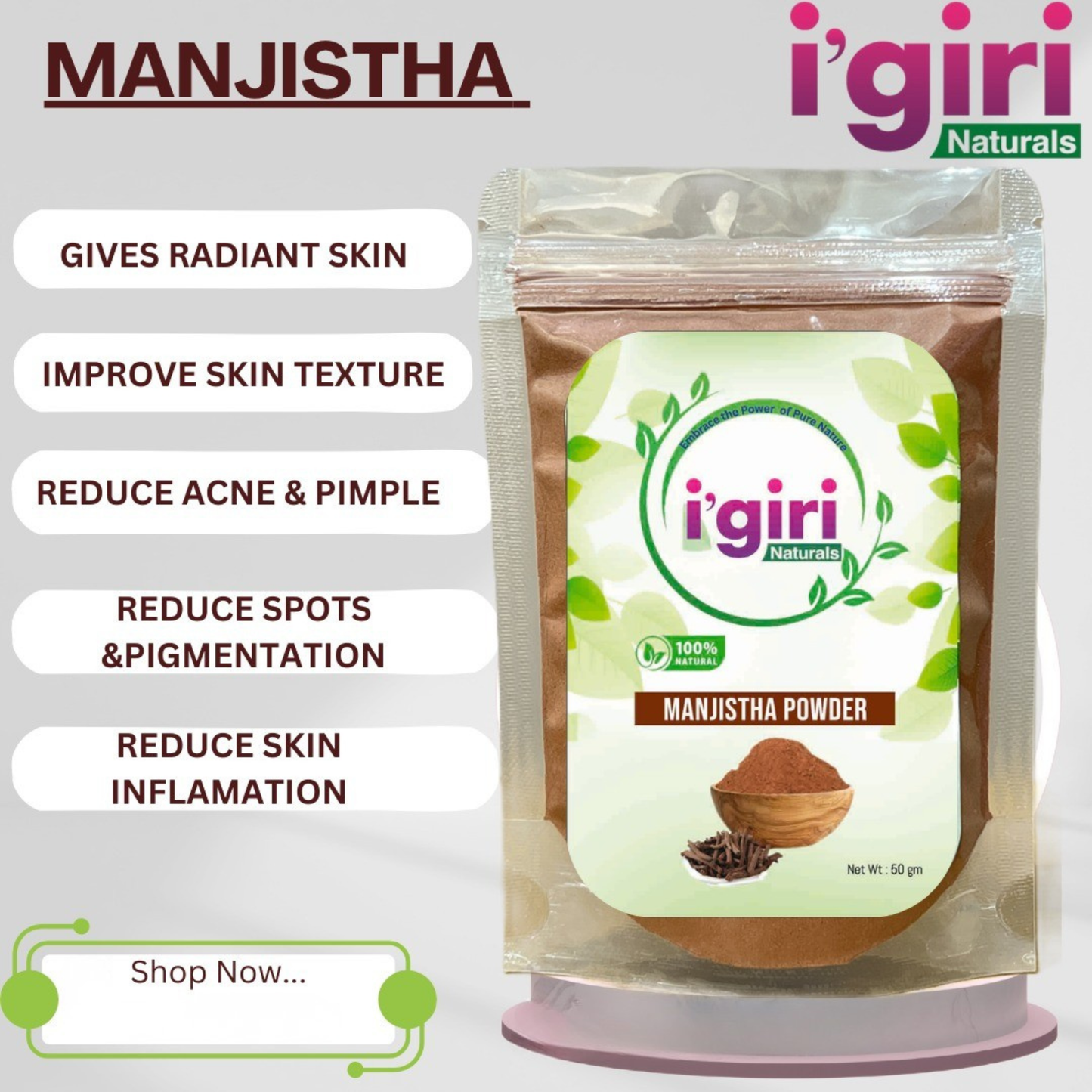
Manjistha (Rubia cordifolia) is a perennial climbing plant whose dried root has been used in Ayurvedic skincare for centuries. The root is finely powdered for use in face packs and ubtan blends. The traditional Sanskrit name Manjista refers to its deep red colouring properties.
How do I make a basic manjistha face pack? +
Mix 1 teaspoon manjistha powder with rose hydrosol, milk, or plain water (choose based on skin type) into a smooth paste. Apply a thin even layer on clean skin, leave for 8-10 minutes, then rinse gently with water. Use 2-3 times per week. Always patch-test 24 hours before first use.
Will manjistha treat my pigmentation or acne? +
Manjistha powder is a cosmetic ingredient, not a medical treatment. It does not claim to treat pigmentation, acne, melasma, or any dermatological condition. For specific skin conditions, consult a dermatologist. As part of a regular cosmetic skincare routine, manjistha may support gentle cleansing and surface freshness.
Is manjistha safe for sensitive skin? +
Manjistha powder is generally well-tolerated when properly diluted, but skin sensitivity varies. Always do a patch test on the inner forearm 24 hours before applying to the face. Discontinue use if you experience redness, itching, or irritation. If you have a known plant or herb allergy, avoid.
How does manjistha differ from other Ayurvedic skin powders like multani mitti or sandalwood? +
Multani mitti (fuller's earth) is a clay — primarily oil-absorbing. Sandalwood is a wood powder — primarily cooling and aromatic. Manjistha is a root — traditionally used for its colour-supporting and cleansing properties. The three are often combined in classic ubtan blends as they serve complementary functions.