


Frequently asked questions
Why is black rice called Forbidden Rice? +
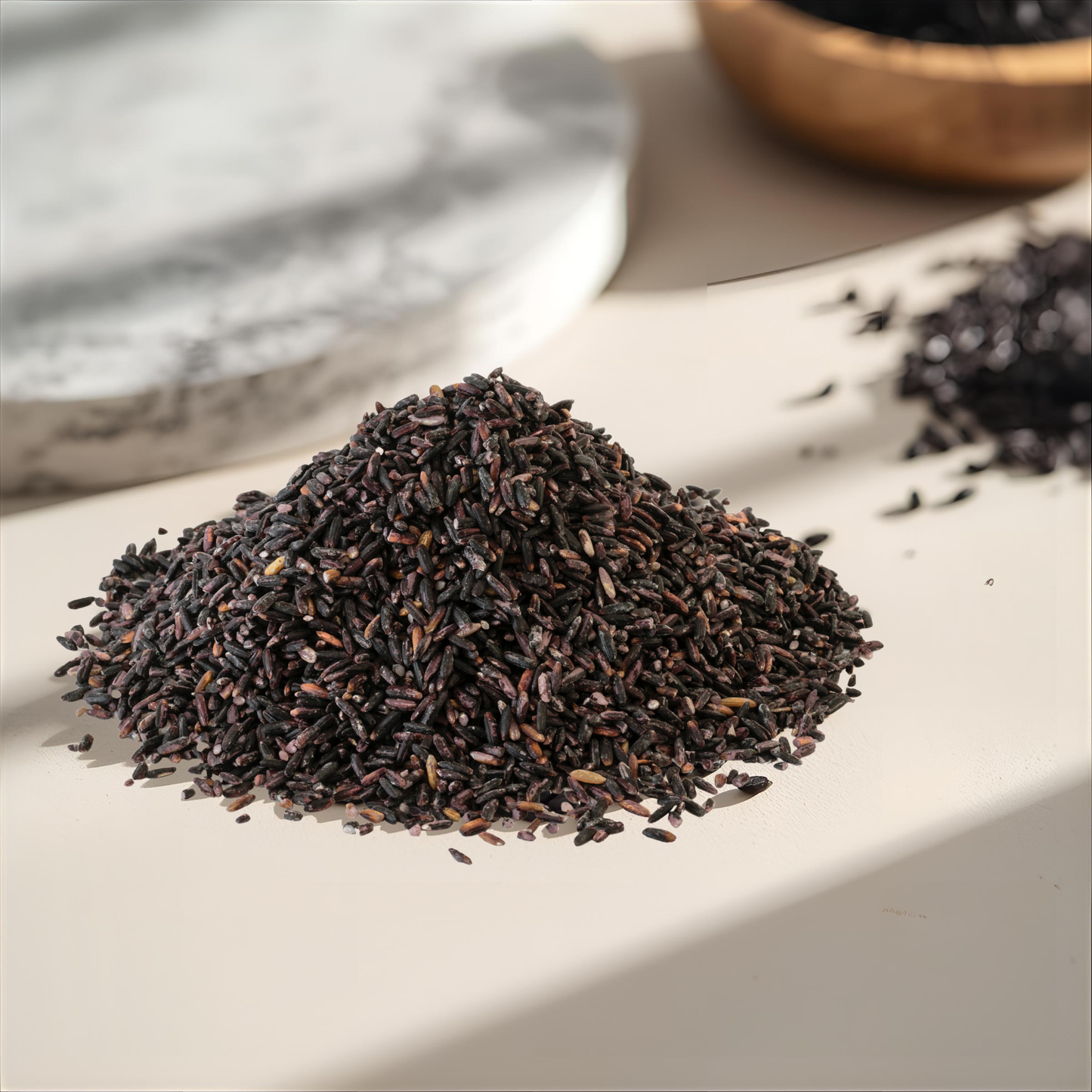
Historically in ancient China, black rice was reserved for the emperor and nobility — commoners were forbidden from cultivating or eating it, hence the name. Today it is widely available and prized for its high anthocyanin antioxidant content (the same pigment family found in blueberries).
How do I cook black rice? +
Soak 1 cup black rice in water for at least 1 hour (longer is better — up to 4 hours). Drain, then cook with 2.5-3 cups fresh water on low flame for 30-40 minutes until the water is absorbed and the grains are tender but still slightly chewy. The cooking water turns deep purple — this is normal.
What does black rice taste like? +
Black rice has a mildly sweet, earthy, nutty flavour — distinctly different from white or brown rice. The texture is soft but pleasantly chewy. It pairs well with coconut milk (Thai-style desserts), jaggery (Indian payasam), ghee, and savoury bowls with vegetables and proteins.
Is black rice a whole grain? +
Yes. Black rice is unpolished — it retains the natural bran and germ layers, making it a true whole grain. This is what gives it the high fibre content, B-vitamins, minerals, and the dark anthocyanin-rich outer layer. Polished black rice would lose all of these.
Can black rice replace white rice in everyday cooking? +
Yes, but with adjustments. Black rice takes longer to cook, requires more water, and has a chewier texture. It works for steamed rice, bowls, payasam, and porridge. For dishes that need fluffy separate grains like pulao or biryani, mix black rice 1:3 with white rice to ease the transition.